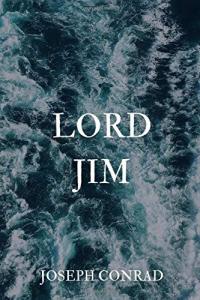
Lord Jim
Date Published
2020-04-19
Synopsis
Lord Jim, by Joseph Conrad, is a classic tale of a young man struggling with his own morality in the face of a dangerous and uncertain world. Set in the early 19th century, the novel follows Jim, a young English sailor, as he embarks on a life-changing journey in the South Seas. Along the way, Jim must confront his inner demons and make difficult decisions that will shape his future. With its captivating narrative and profound themes, Lord Jim is a must-read for any fan of classic literature.
Joseph Conrad (born Józef Teodor Konrad Korzeniowski; 3 December 1857 – 3 August 1924) was a Polish-British writer widely regarded as one of the greatest novelists to write in the English language. His works explore themes of the individual's search for meaning in life, the moral ambiguity of human behavior, and the search for identity. His style was imbued with a realism that was both poetic and philosophical. Heart of Darkness (1902), Lord Jim (1900), The Secret Agent (1907), The Shadow Line (1917), and Chance (1913) are among his best-known novels, and his short stories, such as "Youth" (1898), "The Lagoon" (1896) and "The Secret Sharer" (1910), are considered classics of literature. His works have been widely translated, adapted into films, and studied in classrooms, and their influence on other writers, such as Ernest Hemingway and F. Scott Fitzgerald, is clear. Conrad is seen as a major figure in the development of the modernist novel, and his works continue to captivate readers and scholars alike.
Joseph Conrad (born Józef Teodor Konrad Korzeniowski; 3 December 1857 – 3 August 1924) was a Polish-British writer widely regarded as one of the greatest novelists to write in the English language. His works explore themes of the individual's search for meaning in life, the moral ambiguity of human behavior, and the search for identity. His style was imbued with a realism that was both poetic and philosophical. Heart of Darkness (1902), Lord Jim (1900), The Secret Agent (1907), The Shadow Line (1917), and Chance (1913) are among his best-known novels, and his short stories, such as "Youth" (1898), "The Lagoon" (1896) and "The Secret Sharer" (1910), are considered classics of literature. His works have been widely translated, adapted into films, and studied in classrooms, and their influence on other writers, such as Ernest Hemingway and F. Scott Fitzgerald, is clear. Conrad is seen as a major figure in the development of the modernist novel, and his works continue to captivate readers and scholars alike.
Book Details
Number of Pages
228
Format
Paperback
Publisher
Independently published
Language
en